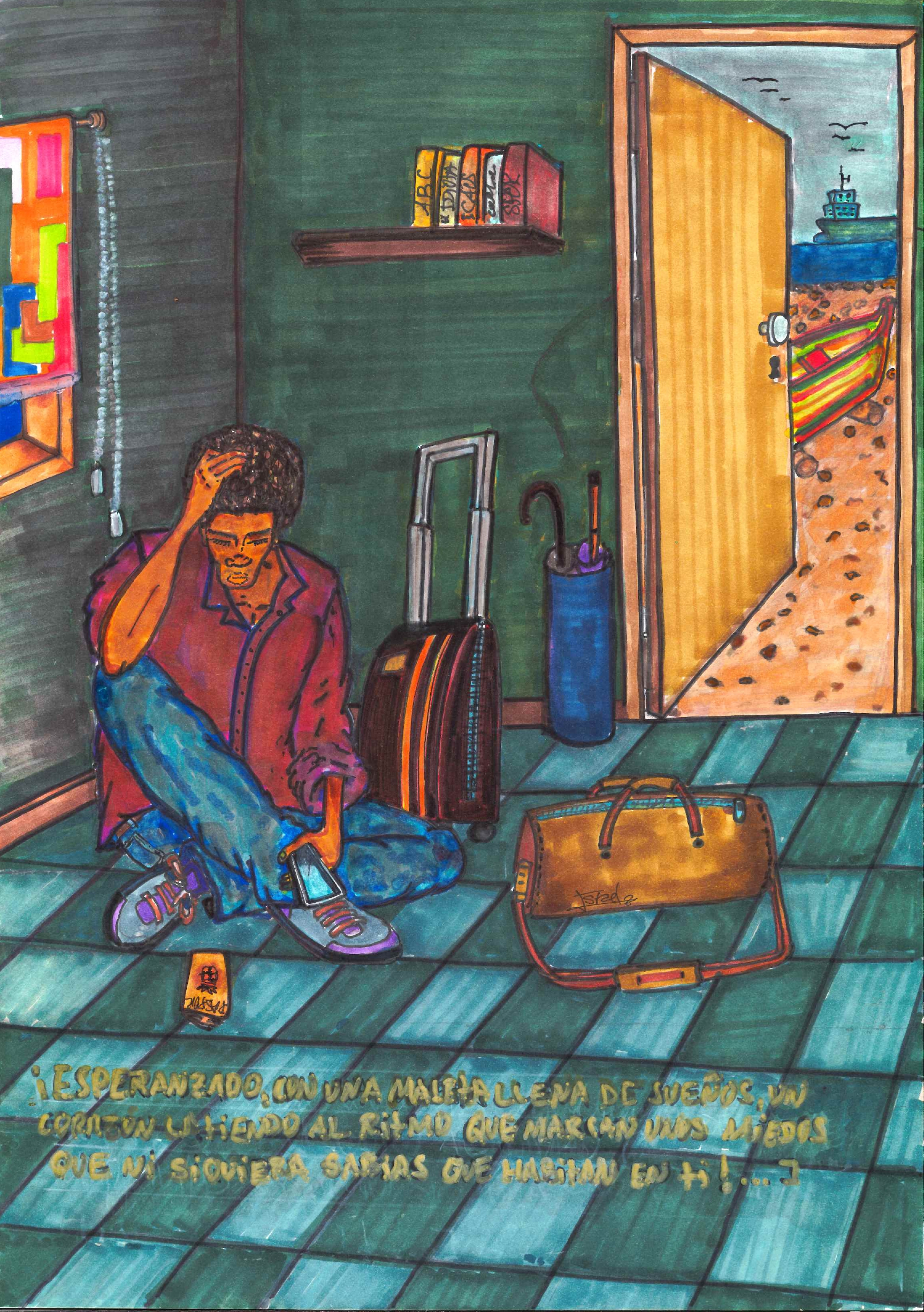

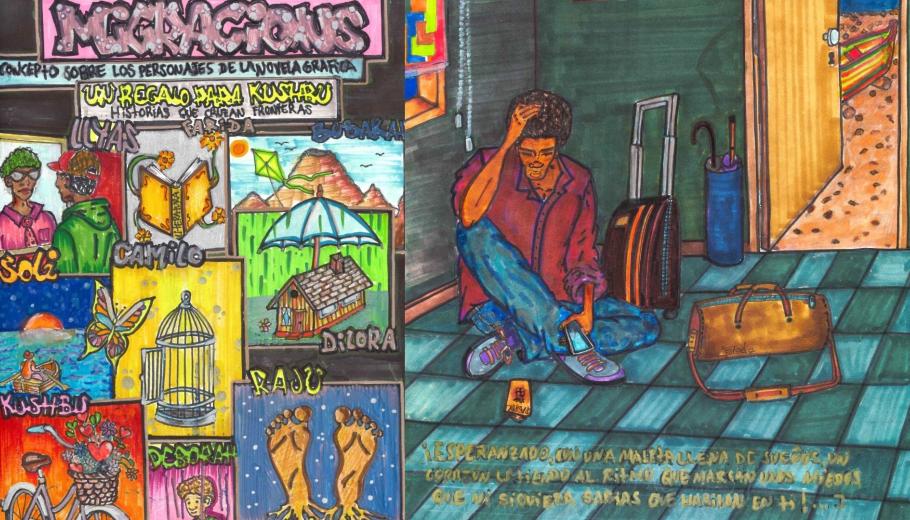


About twenty people deprived of their liberty in this penitentiary center illustrate the reality of migrants in an exhibition with the aim of building bridges between different cultures.
How to express the concept of migration through art? This is the challenge faced by a group of 18 men of diverse origins who are in a situation of deprivation of liberty in the Brians 2 penitentiary center, where this March the creations of these artists will be exhibited. An exhibition that will see the light of day this March, in which the International Day of Zero Discrimination is celebrated on the 1st.
Precisely, one of the objectives of this event is to break with any stigma and discrimination that a person may suffer due to origin, race, sex, culture, sexual orientation, gender identity or disability, among others; especially in areas such as education, employment, health, social and leisure.
In this context, the exhibition that Brians 2, a group of 8 people born in Spain and 10 in other countries, has worked on, seeks to make known the reality of migrants in order to break the stigmas that surround them and build bridges between the different cultures that make up our society.
For this reason, this exhibition encompasses a multiplicity of perspectives, which allows migration to be approached from different perspectives and artistic narratives such as photography, drawing, poetry or prose, said Chaima Farzouz, intercultural mediator at Brians 2, a service managed by Suara Cooperativa in this resource owned by the Department of Justice.
How is the exhibition structured?
To bring the artworks to life, five thematic blocks have been worked on around the migration process:
- Migration: leaving to live
- The path: bodies in motion
- Faces: lives that migrate
- Destination and refuge: arriving without certainties
- Contributions and hope: sowing the future
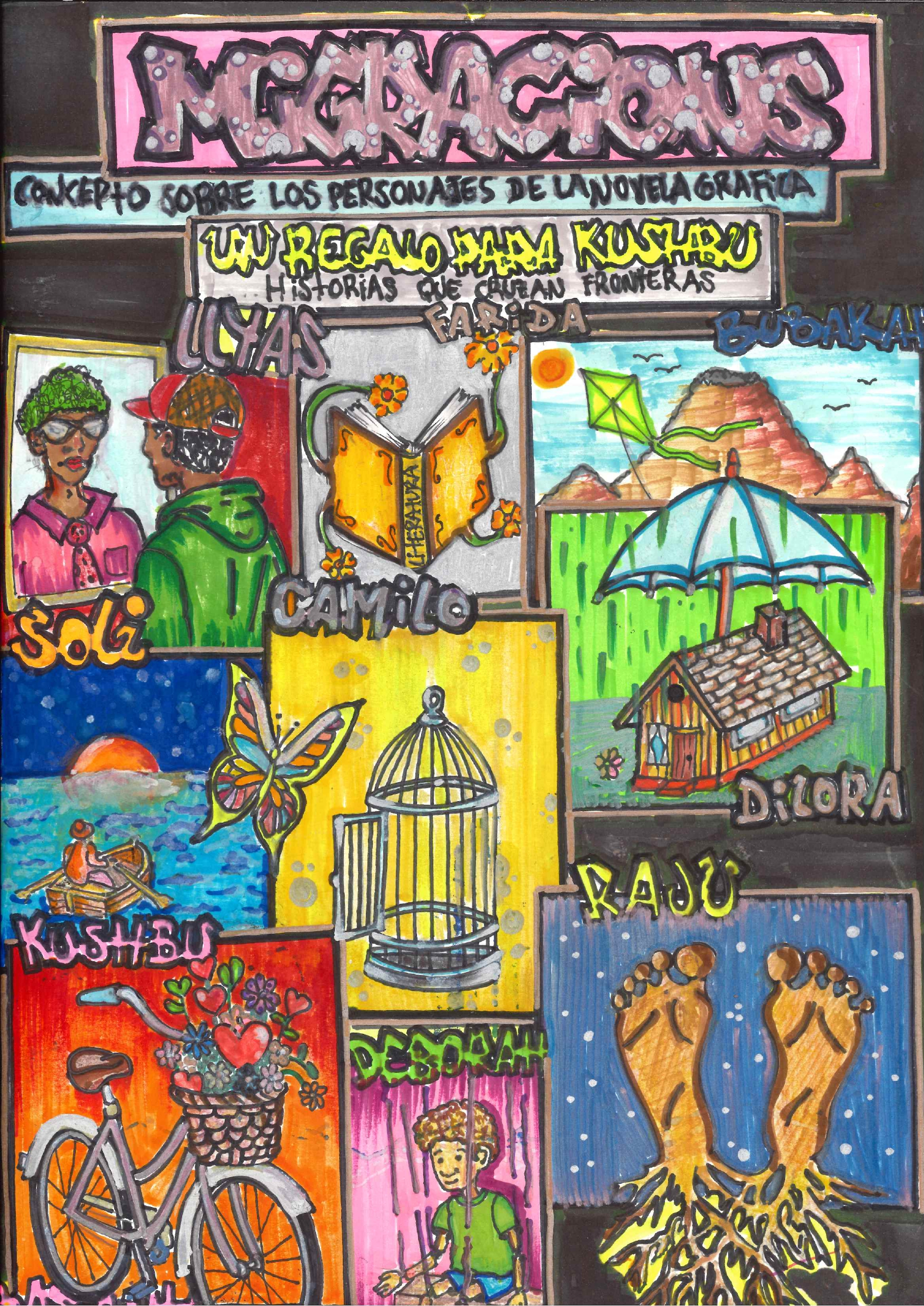
As a result, the artists have been able to explore different aspects related to migratory movements such as, for example: the profile of people who leave their countries; the grief of having to leave home and family; the journey to the new place; the dichotomy of the differences that exist between migrants according to their purchasing power; as well as the difficulties that newcomers encounter in adapting to a society where they do not find facilities to build their life project while at the same time being victims of stigmatization and discrimination in different areas, such as, for example, the educational one to access courses where they can learn the language of the host population.
Without a doubt, the paintings also reflect the emotions that migrants feel, such as feelings of loneliness, sadness or longing, which everyone has when leaving their home to enter a completely unknown new society.
Another of the themes that is brought to the fore is that of identity, where the different origins and cultures of the person enter into dialogue: such as the one of origin and that which you bring from the land where you were born, and that of the host society, which you mimic and internalize. This, in some cases, can end up producing the imposter syndrome, since a person can end up feeling that they no longer belong to the culture where they were born, but neither to that of the host society.
A feeling that is not necessarily present in newcomers from other countries, specifies Chaima Farzouz: “Two inmates of Andalusian origin narrated that they have never felt Catalan and that, in fact, their Andalusian accent has closed many doors to them.”
Richer societies
The artists, however, also wanted to emphasize how migrants enrich our societies. “A boy from the Raval told us how migration has changed the neighborhood, but he assures that he no longer imagines it as it was when he was 3 or 4 years old,” clarifies Farzouz, who states, for example, that Moroccans have solidarity as one of their main values.
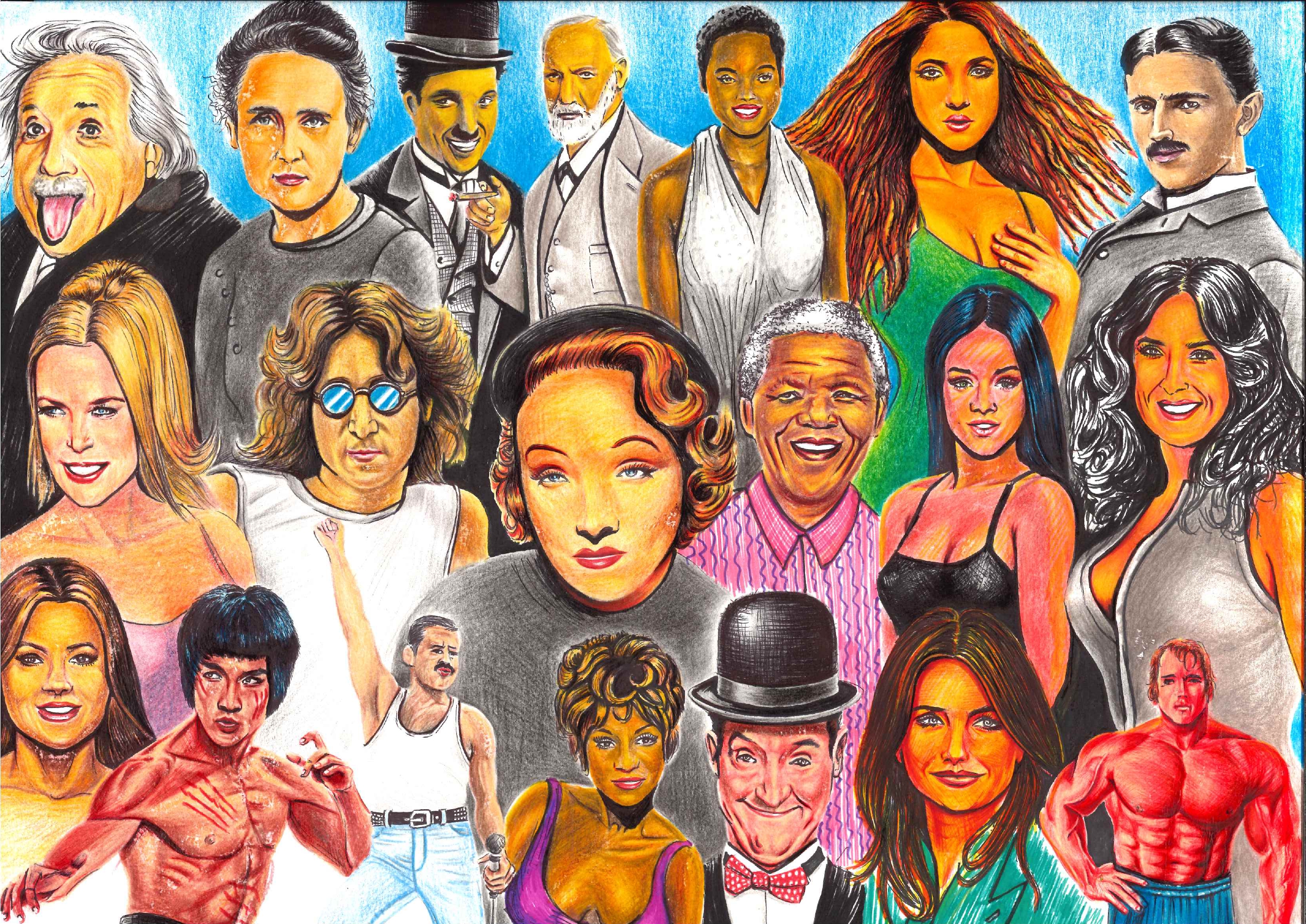
John Lennon, Alfred Einstein, Jackie Chan, Freddie Mercury and Charles Chaplin are some of the characters that appear in one of the paintings to remind us that these migrants have been of vital importance for both the culture of the United States and internationally.
This exhibition aims to build bridges between the different cultures that coexist in a society; as well as being a joint reflection on migratory processes. For this reason, in the last block of the exhibition, visitors are invited to leave their feedback, thoughts or emotions that the works have awakened in them.
With this background idea, the exhibition becomes a prevention tool in conflict resolution according to the culture of peace model that we follow from the intercultural mediation services of Suara Cooperativa. Therefore, the final objective and raison d'être of this exhibition is to encourage
An exhibition that, on the eve of March 1st, International Zero Discrimination Day, becomes more essential than ever to combat the stigmas and discrimination surrounding marginalized groups, such as migrants, in order to build more equitable, equal and cohesive societies where the rights of all are respected and guaranteed.