

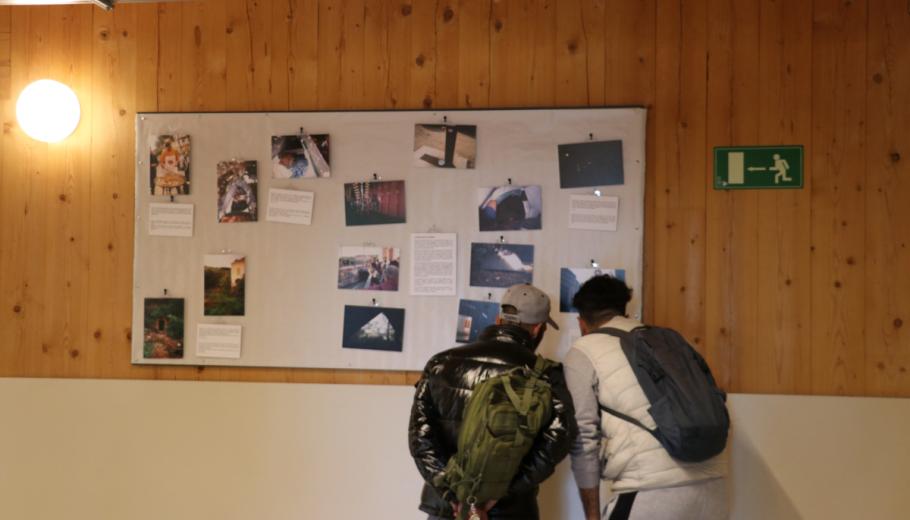


An exhibition featuring images that capture the reality of individuals supported by the CPA Sarrià homelessness service will be held at Casa Orlandai in November, aiming to raise public awareness about their situation.
A single premise: to capture the "invisible Barcelona." This was the instruction given to a group of people experiencing homelessness—supported by the Sarrià - Sant Gervasi Initial Reception Centre (CPA), which is owned by the Barcelona City Council—when staff members handed them analog cameras.
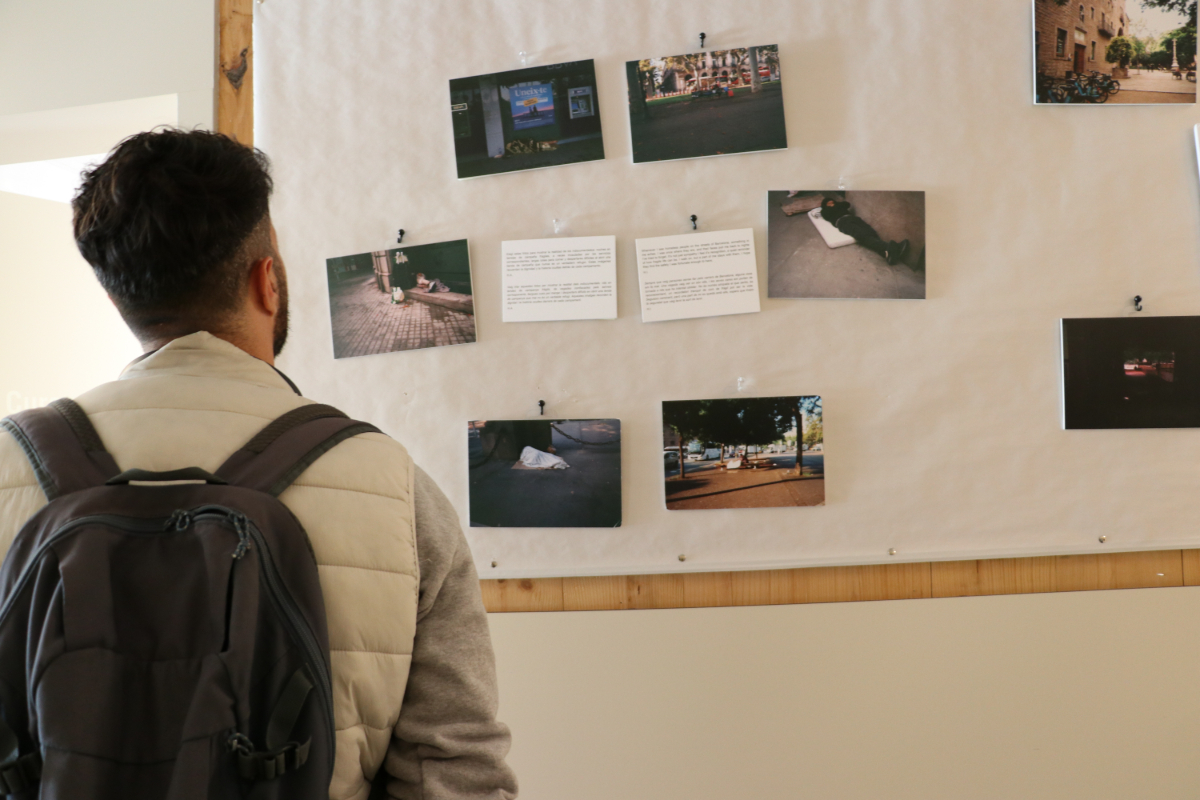
Alleys, squares, or vacant lots where people sleep; a mattress store window; tents on Montjuïc mountain. These are some of the scenes they have immortalized through the camera lenses.
"I wanted to show the hidden side so that people could see what happens on the streets, which is very hard," explains F. (whose full name is withheld to preserve anonymity). F., who is supported by the center, photographed several of the settings featured in the exhibition "The Invisible Barcelona." The showcase aims to highlight those realities that go unnoticed daily, often because people do not even pause to look. Consequently, even though around 1,600 people live on the streets of Barcelona according to the Homeless Support Network (XASPLL), their presence remains invisible.
"People are always rushing around, busy with their own things. They don't pay attention to those who need help. They might look, but they don't really care; they don't know what people living on the street go through," F. argues.
Indeed, the exhibition has a dual purpose: first, to allow the individuals supported by the center to share their reality; second, to raise awareness among the public about homelessness in Barcelona to break down stigmas and stereotypes.
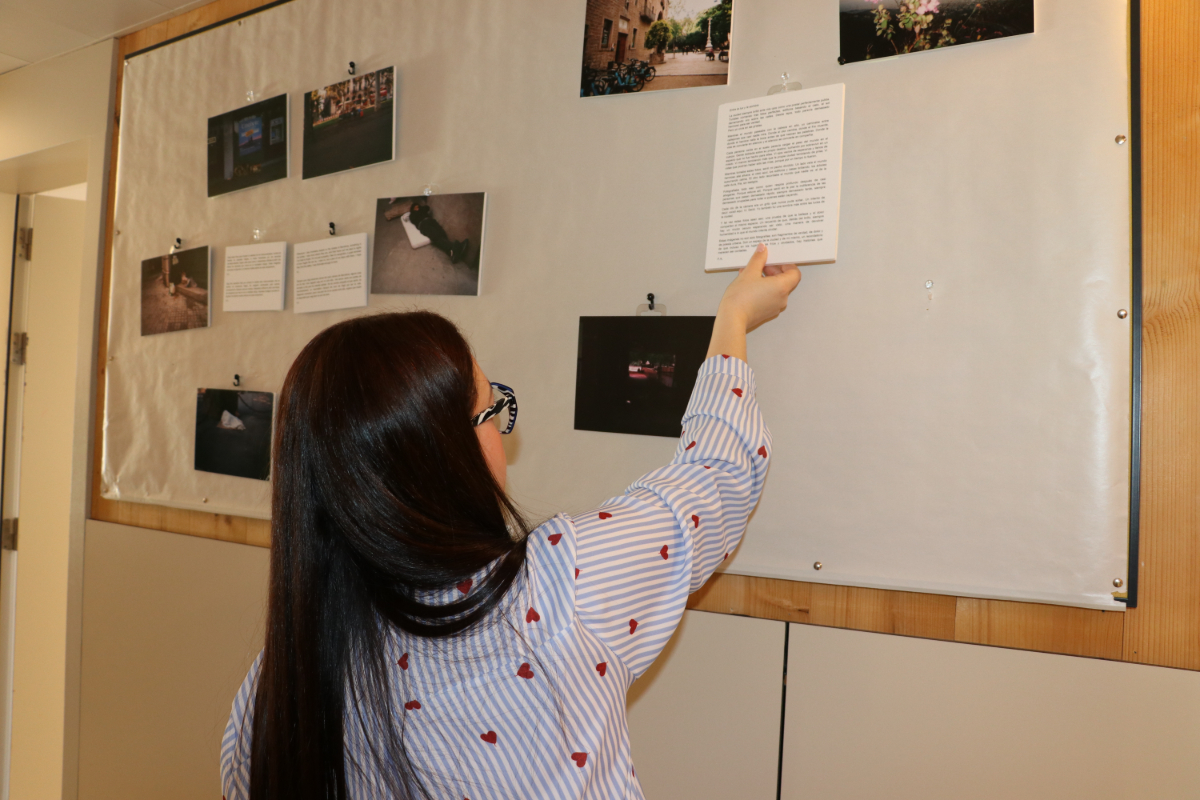
For this reason, after being displayed in recent months at CPA Sarrià - Sant Gervasi, "The Invisible Barcelona" will travel outside the center this coming November to Casa Orlandai, a local cultural association.
"What we aimed to do was to bring visibility to this reality and show that these are people who feel, who have dreams, hopes, and expectations, but often lack a space to express themselves," explains Laura Lucas, a community educator at CPA Sarrià - Sant Gervasi. This service provides overnight shelter for homeless women, while also supporting men during the day with hot showers, meals, laundry services, and other activities. "The exhibition is also a way of speaking out about what is happening."
Photography as a Tool for Expression and Transformation
Photographing their reality has also stirred a wide range of emotions among the participants. These range from fear and anxiety about returning to the streets—felt by those who have transitioned to sleeping at the CPA Sarrià—to a sense of advocacy and denunciation from those still surviving in the open air. All of this translates into images reflecting diverse realities, from journeys of personal improvement to situations of extreme precarity, health issues, or life on the streets.
Thus, photography has become a tool for transformation and empowerment, through which participants have been able to channel their experiences and emotions. For F., participating in this exhibition came at a time when he was still living in informal settlements. "It has been positive. It stirred some things up, but I feel it helped me," says the young man, adding: "It would be good if everyone could talk a little about their experience."
In his case, he went a step further, translating his emotions into words through a text that accompanies the exhibition: "Each click of the camera was a cry I could never release. An attempt to say: I existed here. I lived. I felt. I, too, was just another shadow among the lights," reads an excerpt.
Participation: An Empowering Cooperative Value
One of the core values of Suara Cooperativa is participation, which we view as a tool that empowers individuals through decision-making. As such, it forms the foundation of our support model, where we place the individual at the center so they can lead their own life path through their decisions.
Consequently, "The Invisible Barcelona" is the result of a participatory process that began by offering participants a camera to capture whatever they wished of the city. "They had the autonomy of holding a camera in their hands, going outside the center unaccompanied, and taking the photographs," Lucas explains.
Furthermore, it was the participants themselves who decided which photographs would be featured in the exhibition, the text that would accompany them, the order of appearance, and the final layout: "They were able to decide what to show to society and how to do it. It is not our view of homelessness, but theirs," highlights Lucas, adding: "By putting the person at the center, they felt like the protagonists, knowing they were being heard and that their reality was being made visible so that we could truly perceive what homelessness is."
"These images are not just photographs; they are fragments of truth, of pain, and of urban poetry. They are a mirror of the city and of myself, a reminder that even in the coldest and most forgotten places, there are stories that deserve to be told," F. concludes in his written piece for the exhibition.


