

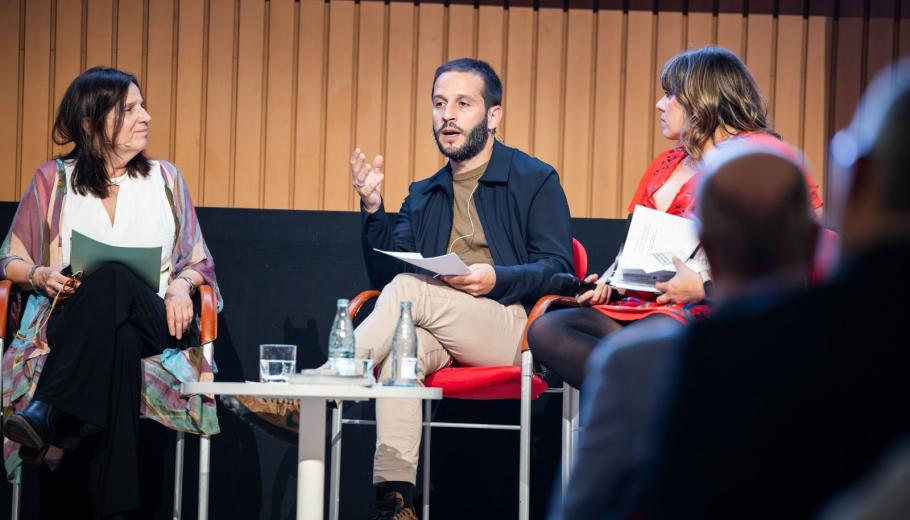


Sergi Fortià, criminologist and CEO of Suara Cooperativa, participated in the 5th Criminology Night where the functions and challenges of criminology within the penitentiary system were addressed
What does criminology bring to the penitentiary system and what are the challenges it faces in this area? This was the premise of the 5th Criminology Night, recently held in Barcelona and organized by the College of Criminologists.
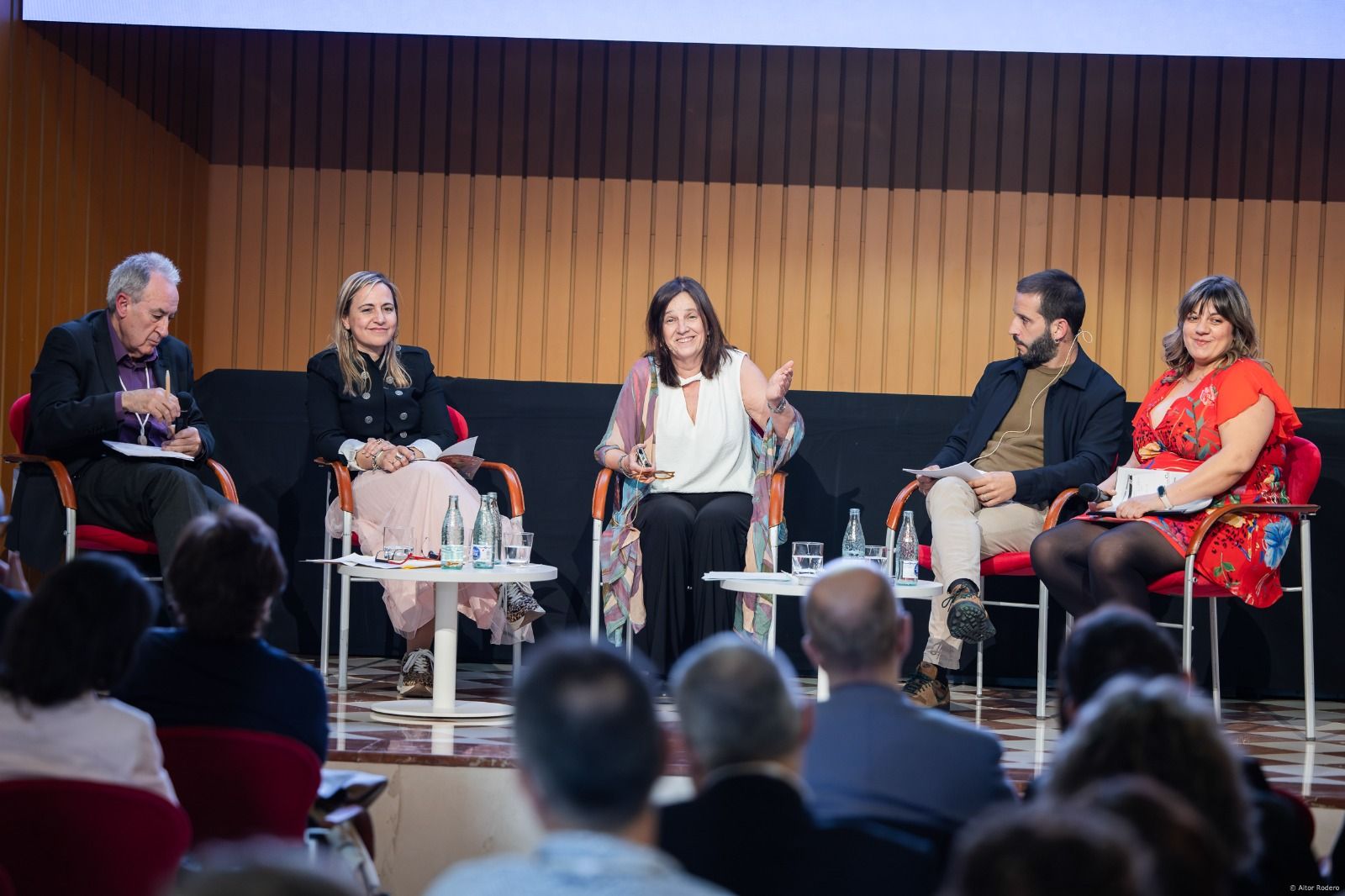
In detail, within the framework of this event, the debate “Criminology in the penitentiary system: functions, challenges and professional recognition” took place, in which Sergi Fortià, operational director of Suara Cooperativa, participated.
One of the key points that was put on the table is the outsourcing of justice services. For example, in the case of Suara Cooperativa we manage services linked to the Department of Justice such as intercultural mediation in prisons, reintegration apartments, Justice Dependent Units and road safety and gender violence training.
Services that Fortià, who has a degree in criminology and a master's degree in Criminal Enforcement and Restorative Justice, knows firsthand from the different assignments he has had at Suara Cooperativa where he began his journey in 2014 in the social reintegration apartments of Figueres (Alt Empordà). Later, he was in charge of the road safety and gender violence training courses, then he also directed the Dependent Justice Unit of Figueres and opened the intercultural mediation service. Currently, as Operations Director, he also has among the services he directs the UDs of Martorell and Terrassa.
Multidisciplinary teams
For Fortià, criminology should not serve to replace other professions, but is a key piece within multidisciplinary teams that must guarantee the social reintegration of people deprived of their liberty.
"The key is to understand that Criminology was not born to replace other professions, but to cover a specific need that no other discipline addresses in a central way: understanding crime, recidivism, victimization and prevention from a scientific and comprehensive perspective," Fortià assured during the panel discussion, which took place on May 15.
In fact, one of Suara Cooperativa's bets is to create multidisciplinary teams and not only in the field of justice, but in all the services it offers. An example that we already have in place is the Barnahus where we care for children who are victims of sexual violence. These are spaces where we offer a safe environment to victims and in which different disciplines such as the judiciary, psychology, medicine, education and social work and the security forces work in intercooperation. Another example is the justice services such as those under Fortià's charge, which encompass different specialties such as education and social work, psychology or criminology.
On the 5th night of Criminoligia, Fortià shared a table with other professionals linked to penal enforcement: criminologist Arantxa Hernáez, who works as a job inserter at the Center for Initiatives for Reintegration (CIRE); professor of Psychology and Criminology at the University of Barcelona Santiago Redondo, who is a specialist in violent crime, recidivism and the treatment of criminals; psychologist and criminologist Marian Martínez, specialized in the psychology of crime; and psychologist Rosa María Martínez, who is currently head of the Planning area of the Department of Justice of the Generalitat of Catalonia.


