

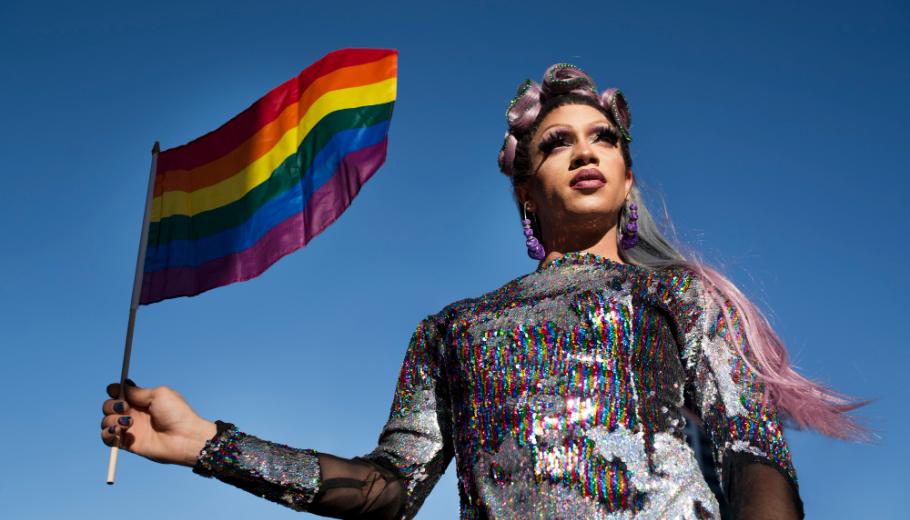


Marc Bolet, director of the La Ràpita Assisted Living Facility, addresses on this International Transgender Day of Visibility the importance of ending the workplace apartheid for transgender people, as well as how Suara Cooperativa supports young transgender people in supervised apartments.
Although in recent decades we have made great progress in the recognition of our rights, I have long had the feeling that some people in the LGTBIQ+ community live light years away from the rest of their colleagues, as if they were walking with their shoelaces untied. I am referring to trans people, who, in many cases, continue to live their own apartheid. At least in some important aspects of their lives, which are still the same important aspects of the lives of other people.
A clear example of this reality is access to work. According to a transnational study, developed within the framework of the project “Transcending Barriers: Promoting Trans Inclusion in the Workplace” and with the involvement of the Applied Social Sciences group at the University of Girona, it is clear that there is a significant separation between declared labor policies and the real experiences of inclusion that trans people live. The employment rate is below 65%, which shows structural difficulties in access and job stability. A significant fact is that although 94.4% of the people who participated in the study claim to have shared their gender identity with someone in their environment, this openness decreases significantly in the workplace. 41.6% have not communicated it to any superior and 26.8% have not done so with colleagues.
At the residential services for childcare and adolescence managed by Suara Cooperativa, we are very aware that work is one of the most important elements of integration into the community for any person. It has been shown that the inclusion of minorities in work environments favors their visibility and normalization. That is why, from our services, we accompany the adolescents who are part of the group from different perspectives. From individuality, promoting aspects such as self-knowledge to improve self-esteem, asserting their way of being, of living and seeing the world around them, working on the potential of each boy and girl. Listening to them, because often it is what they need most, and respecting and accompanying them in the processes they decide to undertake. Also, in the community, working with the rest of their colleagues who live with them. We are aware that the difficulties of trans people go beyond services. For this reason, we ensure that our young people can develop in all aspects of their lives without any difficulty or, at least, with the same difficulties as the rest.
What are we doing wrong as a society so that trans people are not yet at the level of other minoritized realities? As Estefania Vidal, a 71-year-old trans activist who I would spend hours listening to, said at a recent event at Suara Cooperativa, the collective must not defend its rights from resentment, but from conciliation with other realities, including heteronormativity.
In such a polarized society, we have an obligation to avoid extremism, both on one side and the other, and abandon the idea of winning to focus on persuasion. Convince that the trans reality is a way of life as dignified as the rest. Trans people do not choose to be, but rather they need to be. And I say need because absolutely everyone has the right to feel comfortable with their body and their way of being.
In short, to convince those who don't think like us that trans people feel the same way as them and, therefore, they also have the right to a conversation with the people they love, to enjoy the first day of vacation, to go up the mountain and fill their lungs with air and go down to the beach and do the same. They have the right to the feeling after doing sports, to be sure that they are right but prefer not to argue, to sex, to wake up and see their smile, to open a gift and for the bad guys not to always win. They have the right that this International Trans Visibility Day, which is celebrated today, should not exist, because it would mean that their rights are guaranteed. And they have the right to laugh. To laugh a lot. They have the right to laugh until the tears fall.
Marc Bolet Benito
Directorate Assisted Living 16-18 La Ràpita


