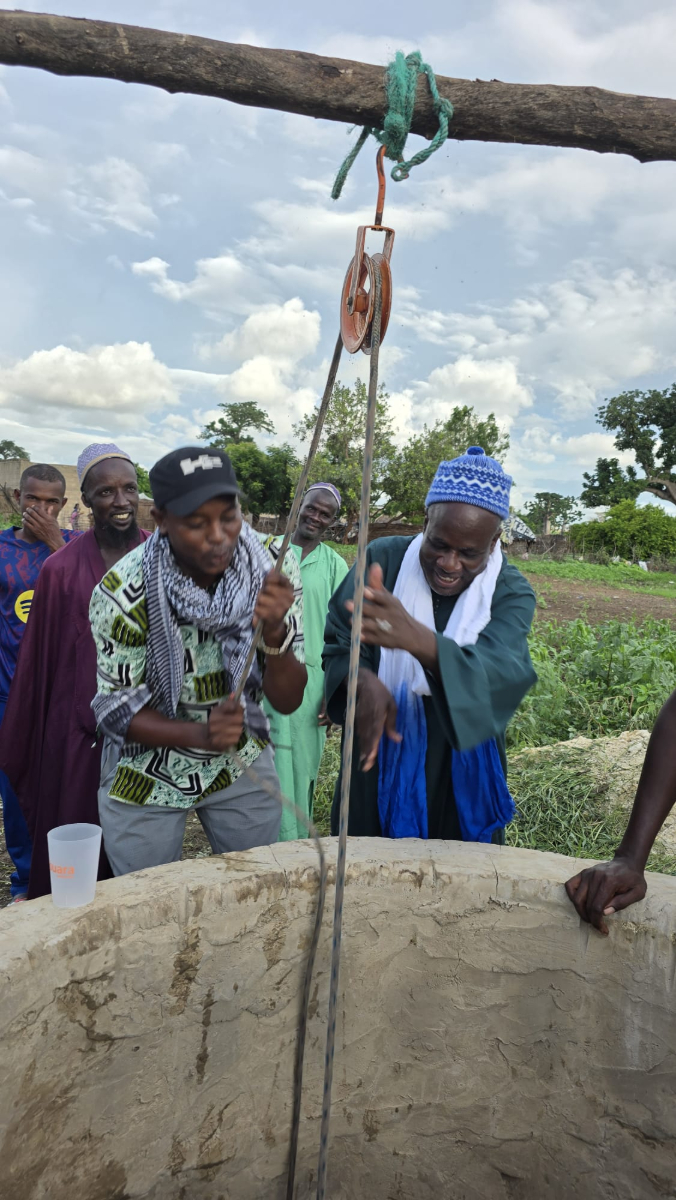

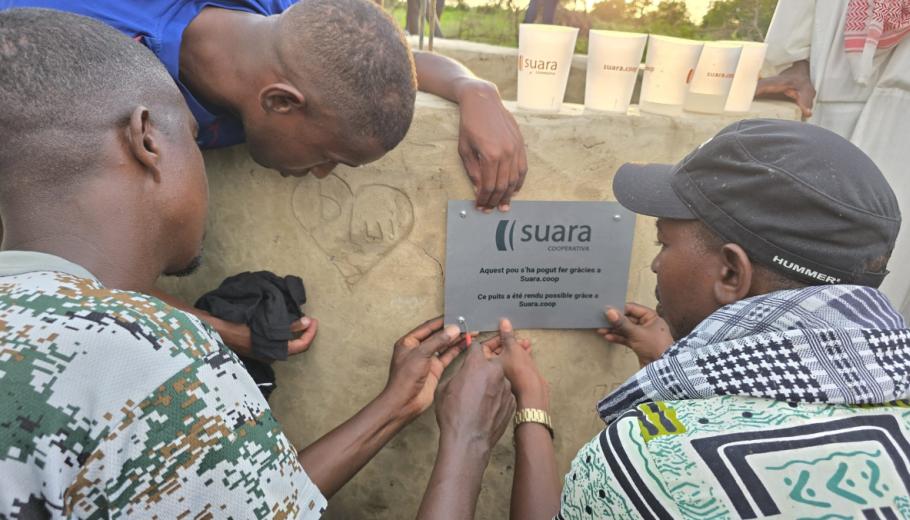


This initiative, which has been financed with an environmental transformation project, will not only serve for human consumption, but also for livestock and to be able to start cultivating gardens, which will improve the local economy and the sustainability of society.
The mission of Suara Cooperativa is the social transformation of the environment to improve the lives and reality of people. For this reason, social responsibility is one of the essential values that guides our action, since, through it, we promote initiatives that put people and the environment at the center of our activity. In addition, for social responsibility, we are also a non-profit cooperative and, therefore, we reinvest our profits in initiatives that help develop territories and that are born from the territories.
This is the case of environmental transformation projects, through which we finance initiatives aligned with a Sustainable Development Goal (SDG) and that the workers and members themselves present to improve a service, a territory where we are present or others of an international scope and that they have worked in. In addition, we, the members of Suara, are also the ones who choose by vote the projects that the cooperative will develop.
This is how the project “Water is life, prosperity and sustainability” was born to finance the construction of a community well in Keur Macoumba in the Thies region of Senegal. Until now, there was no aquifer resource in this area and, therefore, the local population had to travel on foot, by donkey or cart tens of kilometers to be able to get water.
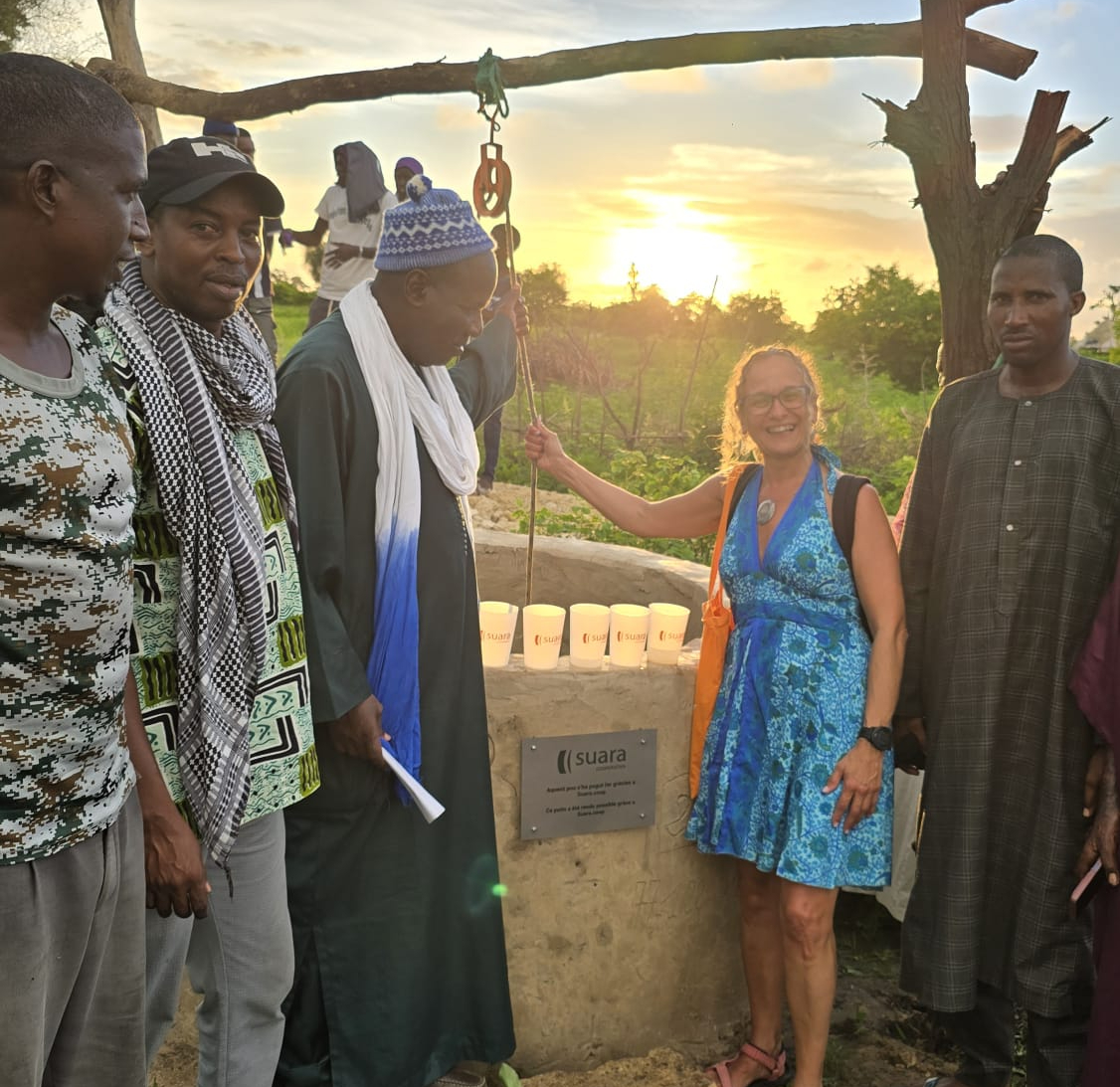
In the Thies region, the villages are equidistant and separated from each other, so this well will not only benefit the population of Keur Macoumba, but will also cover households within a radius of approximately 10 kilometers. This will allow around 1,800 people to have access to such a basic and essential resource as water.
The project's promoter on the part of Suara Cooperativa is Pepi Ruiz, leader of the social project, who in the summer of 2024 traveled to Senegal, where she met Baba, who was then her tour guide and has now become her collaborator. “I chose the Keur Macoumba community because it is the largest in the area. It has more than 600 inhabitants. There are other villages in the region, but they were smaller,” argues Baba.
The construction of the well
One of the main objectives was to have this infrastructure ready for the rainy season, which coincides with our summer. For this reason, its construction began on May 19 so that it would be a reality in June, although the official inauguration did not take place until September, when Pepi Ruiz was able to travel there. “It was a party”, she highlights excitedly.
A celebration that began months ago, in March when Baba spoke to the three community leaders: the men’s, the women’s and the boys’ to see if they would let them create the well there. “That day we all ended up dancing”, recalls the Senegalese.
The construction of this infrastructure, which was carried out with a generator and an electric hammer, has been a great event for the community, which has been completely overwhelmed. “The villages in Senegal are like a big family and when a stone came out, everyone helped to remove it”, says Baba.
The well is prosperity
For now, as a test of how far the well can supply, each family can draw up to 200 liters a day for their daily needs such as drinking, cooking, sanitation or for livestock. Later, they will see whether or not to increase this amount according to what the well offers them.
The most important thing, however, is that this infrastructure not only gives people drinking water, but is also a resource that opens up new possibilities and a path to a more prosperous life. “Until now, they couldn’t have a vegetable garden,” says Baba. This has changed and they have already created a community garden where they mainly grow cabbage, onions and carrots, which are their basic vegetables for now.
In addition, if they have excess production, the women can go to the local market to exchange these products for others such as eggs, meat, oil, rice or wood. “Vegetables are currency here in Senegal,” says Baba.
Therefore, this well, which has cost around 5,000 euros between the required material and the hiring of workers, not only provides them with water, but is also a generator of prosperity and wealth. A good example of this is that with this consolidated infrastructure, the mothers have another request: now that water reaches the village, there is no longer the need for children to walk tens of kilometers to go to school and they can create one in the community so that they can study in the community.