

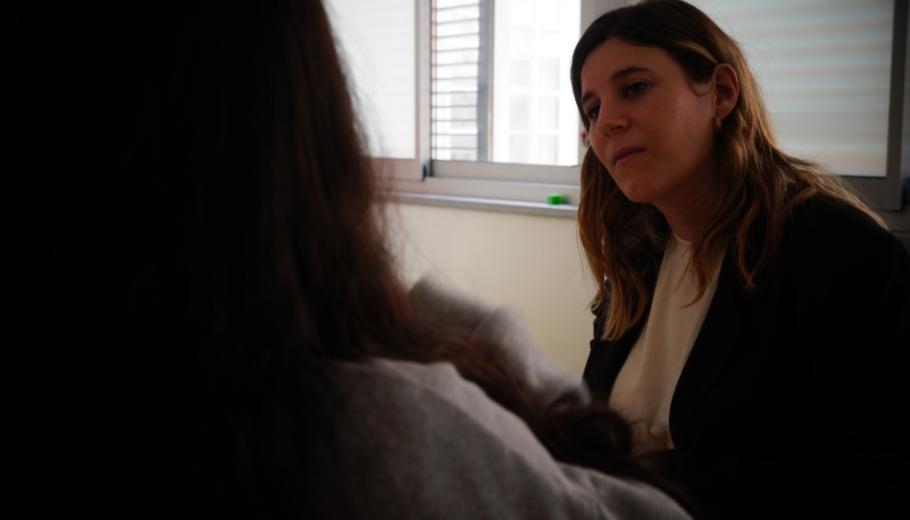


The Catalan actress visited the Marialar shelter, where she was able to learn about the reality of the women we serve, survivors of gender violence, as well as the work of the professionals.
When the door opened, a group of women waited with emotion for actress Àngela Cervantes at the entrance to Marialar, a service for survivors of gender violence owned by the Barcelona City Council and managed by the UTE de Càritas de Barcelona and Suara Cooperativa. The Catalan artist looked at them and, one of her first thoughts, was that she didn't know how to differenciate between which women were being served and which worked in the service.
“It made me reflect that, in truth, we can be any of us. We can all be victims of gender violence. Hopefully, we are all more aware of this”, argued Cervantes in an interview for the Càritas Barcelona and Suara Cooperativa team.
The visit of the Catalan actress, which took place on March 10, took place within the framework of the 8-M. “Until now I have not been aware of the importance of feminism being intersectional and here (in Marialar) too, you see it”, defends Cervantes, who adds: “Many times the discourse that we have, and I have been part of it, is a feminism that only includes some of us, and it will not be a real feminism if it does not include all of us”.
Visit to Marialar
Cervantes arrived at the shelter at 12:00 noon and was able to see its facilities with the help of its director, Elisabeth Luque. In this space there are two services: one for short-term emergencies and another for medium or long stays for women survivors of gender violence and their children.
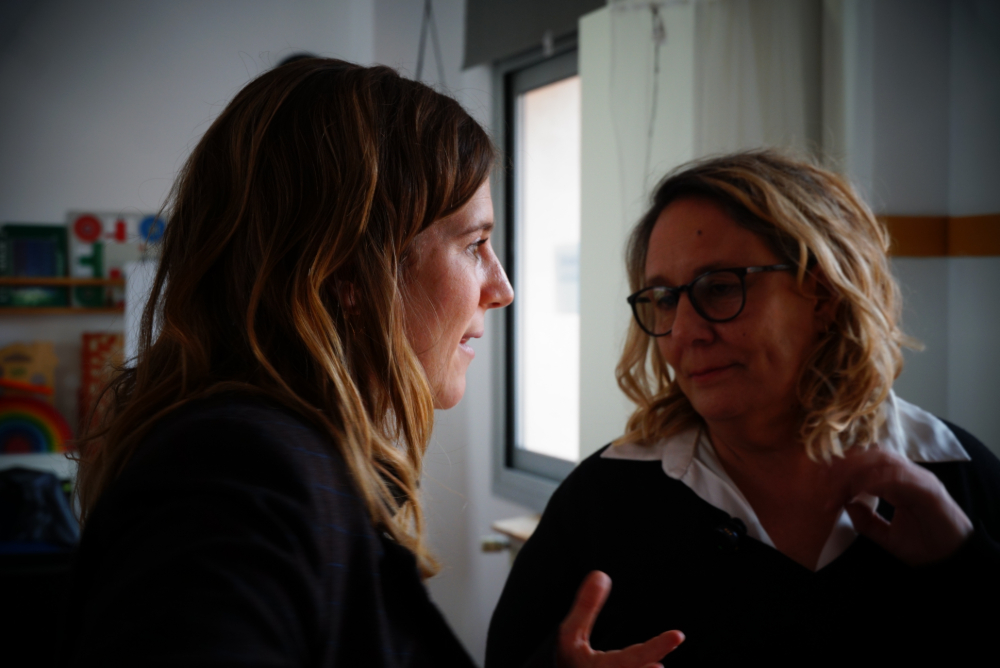
In both, Luque explains, work is done to generate a bond with the person being cared for so that, little by little, they can gain trust with the workers at the center, as well as with the other women who live there.
According to the Suara Cooperativa care model, this service places the person at the center of their life process to empower them through decision-making. This is also worked on at a group level with the residents and, for example, they themselves have decided which activities they wanted to carry out on the last 25-N, International Day for the Eradication of Violence against Women. In 2024, they chose to make a video clip of denunciation; while in 2025, a community action to make the population aware of how to support a woman who suffers from gender-based violence.
Cervantes highly valued the work carried out at the shelter and called for the need for more spaces like these: where they are accompanied to rebuild their lives so that they stop being victims and become survivors of gender-based violence.
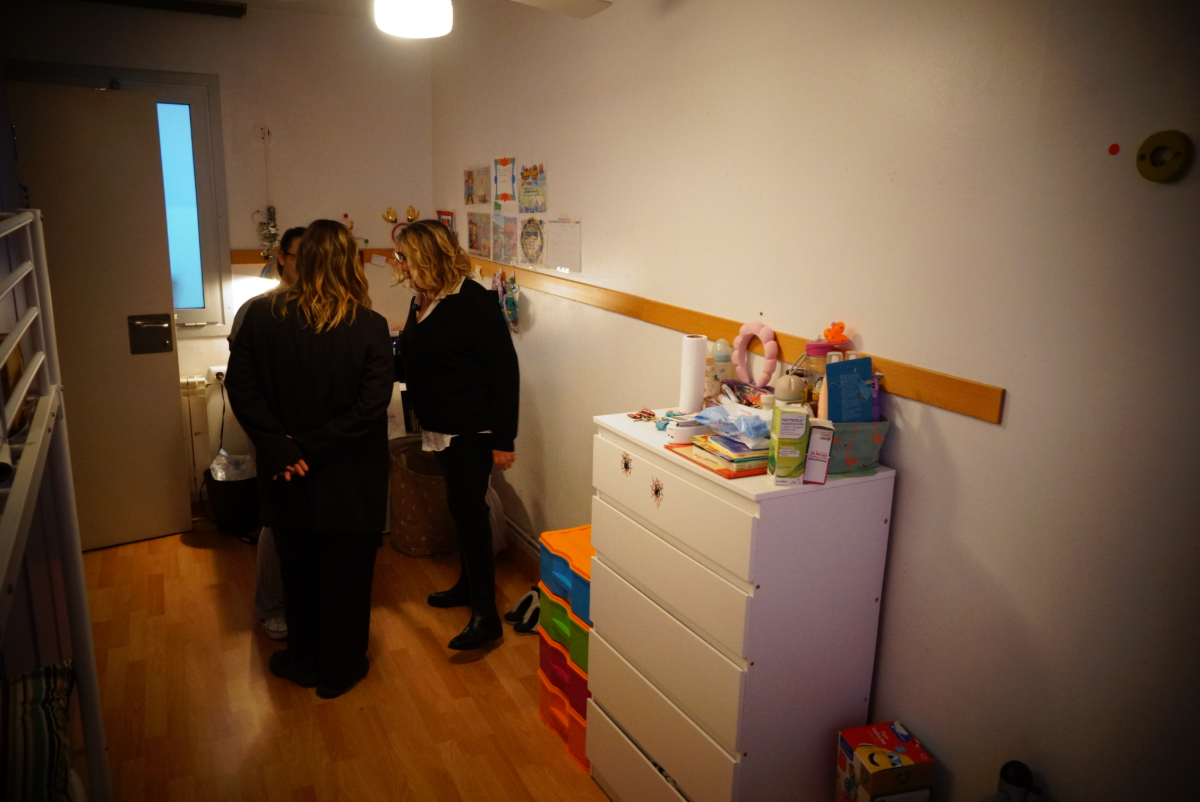
“I don’t know how to do the screening, but it must be very hard to decide what degree of risk and danger this person has for their survival and who gets here or stays out”, reflects the actress. She believes that “the work (that is done in Marialar) must be made visible to allocate the resources, energy and money necessary so that there can be more spaces like this and that women are not left out because there are so many of them”.
During the interview, she highlighted the vital role played by people who work in social education: “The work of social education should not only not be denigrated, but it should also be reflected in salaries because it involves a lot of mental strain and they do an incredible job. Taking care of those who care is very important and must be supported by institutions.”
Sharing with the women of the center
Once the more institutional visit was over, Cervantes was able to stay for more than two hours with the women who live in the center to learn about their reality, while they were able to ask the actress about the challenges that cinema has to make women visible, introduce the gender perspective, relieve women of aesthetic pressure or how she felt the weight of sexual violence in her latest role in the film La Fúria, which is about a rape suffered by Alex, a young actress, during New Year's Eve.
“If the films have a social content, there will be more reflections and we will open minds more that, as the world is today, we must be more open to listening and dialogue. Films, plays, series, generate this: sitting down and talking about them”, says Cervantes.
During the visit, the actress shared a table to eat with the women and the educational team, and carried out different activities with them. One of these was to take a card, each with a different drawing and explain why it had been chosen according to the vital moment of each one. Cervantes chose one from a maze to who is now in a moment of searching for her path.
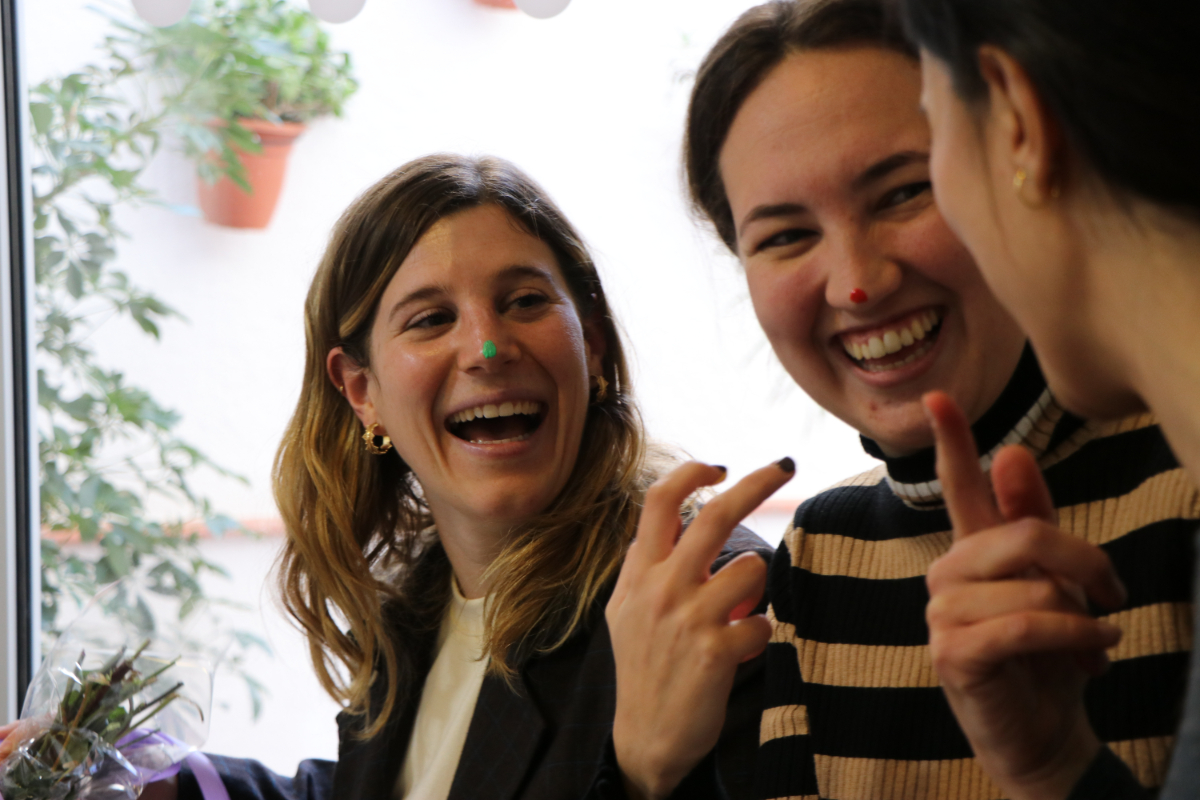
“Being here with you today has helped me a lot. I admire you very much. You are a sign of improvement and everything you put in to be better, the truth is, it is admirable. It helps a lot that you share it, it is very beautiful and reminds me that we need to share things more to move forward”, Cervantes confessed visibly moved. The space ended with a collective hug.
Regarding how the team experienced the visit, Laura Morenilla, coordinator of the emergency service, highlighted Cervantes' closeness: “The desire to be and sit down face to face to talk to them and her sensitivity. She was a very close person and sensitive to the project”.


