

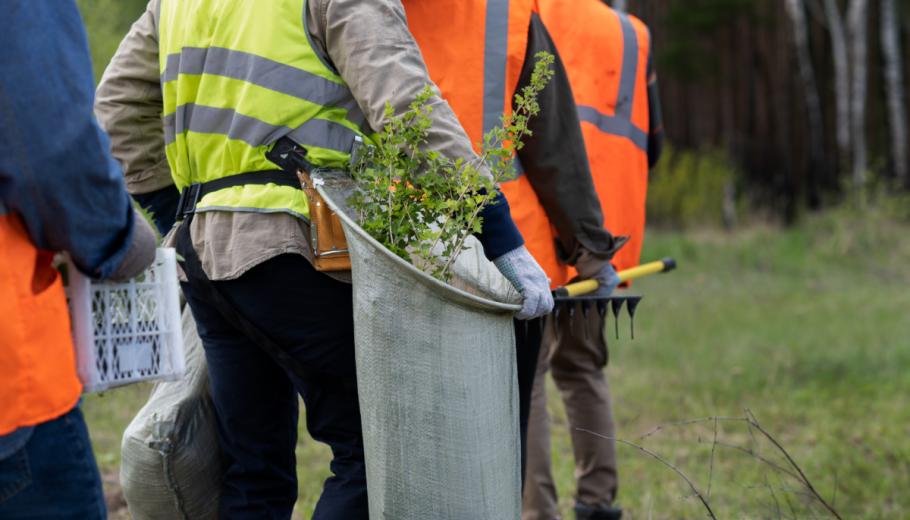


In this Year of Occupational Health and Safety, decreed by the Spanish government, Estefanny Olmedo, prevention technician at Suara Cooperativa, defends that companies must include prevention plans to face the new occupational risks triggered by climate change.
Climate change is having an increasingly direct impact on the health and safety of workers. Rising temperatures and the intensification of extreme weather events are generating new occupational risks that require a rethink of prevention, especially on dates such as International Workers’ Day and the World Day for Safety and Health at Work.
One of the main risks is the increase in heat waves, which particularly affects people who work outdoors or in poorly ventilated spaces. Prolonged exposure to high temperatures can cause serious health problems, making it essential to adopt measures such as regular breaks, adequate hydration and adaptation of work schedules.
In addition, climate change is increasing the frequency of extreme events, such as floods or intense storms, which can endanger people’s safety and interrupt work activities. Having safe infrastructure and updated emergency plans is key to reducing these risks. Climate change also has effects on air quality, respiratory health and emotional well-being, increasing psychosocial risk.
Given this reality, occupational risk prevention must evolve towards a more preventive and anticipatory model, capable of protecting the health of workers and guaranteeing safe and sustainable work environments.
In addition, it is essential that employers and business owners, as well as workers, understand how climate change can affect safety and health. This understanding must allow all actions aimed at preparing for and adapting to climate change and extreme weather phenomena to be integrated into companies' preventive activities.
In this sense, it is essential to have adaptation protocols and clear action guidelines, as well as informing and training all staff on how to act and in which cases these measures should be activated. These protocols, integrated within emergency or self-protection plans, must include the management of meteorological events at three key moments: before the episode (prevention and preparation), during the episode (action and protection) and after the episode (recovery and resumption of activity).
It is also necessary to take into account the characteristics of the tasks and the personal conditions or known biological state of the workers, in order to adopt the most appropriate preventive and protective measures in each case.
A key element of these protocols is the management of meteorological warnings, which can be classified into different risk levels:
- Green: there is no meteorological risk. No significant impacts are expected, although minor or very localized effects may occur.
- Yellow: there is no risk for the population in general, but for specific activities. You must be attentive and stay informed of the updated weather forecast, as some outdoor activities may be altered.
- Orange: there is a significant weather risk, with unusual and potentially dangerous phenomena for daily activities. You must be prepared, take precautions and follow the evolution of weather information, as usual activities may be affected.
- Red: the risk is extreme, with very intense phenomena and a high impact on the population. You must act according to the instructions of the authorities, take extreme safety measures, avoid unnecessary travel and stay permanently informed.
Given this reality and in this 2026 that the Spanish government has decreed as the year of Occupational Health and Safety, it is necessary to emphasize that the prevention of occupational risks must evolve towards a more preventive and anticipatory model, integrating specific protocols in the face of adverse climatic phenomena. In a context of climate emergency, protecting the health and safety of workers is an urgent responsibility and a key element in ensuring safe and sustainable work environments.
Estefanny Olmedo Cajamarca
Prevention Technique


