

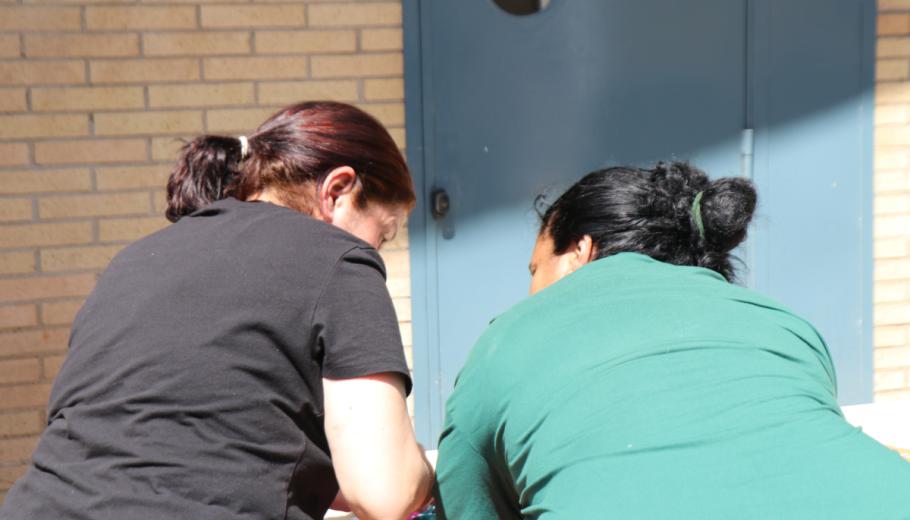


Abdelamjid El Gourche and Maria Amanterrou, intercultural mediation professionals at the Ponent Penitentiary Center—managed by Suara Cooperativa—explain how this service improves the present and future of incarcerated individuals, coinciding with Penal Execution Day this September 23rd.
The penitentiary environment is a complex space where individuals with vastly different life trajectories, often marked by vulnerability, live together. Within this context, Suara Cooperativa's intercultural mediation service acts as an essential bridge to foster communication, prevent conflicts, and guarantee humanized, individualized support that improves daily life for incarcerated individuals, both inside the facility and during their future social reintegration.
In the specific case of the Ponent Penitentiary Center, there is a wide diversity of backgrounds—primarily vulnerable individuals with a lack of family and community ties, integration challenges, and frequently mental health issues and/or substance use, alongside people from diverse origin backgrounds, explains Abdelamjid El Gourche, an intercultural mediator at the center, a service funded by the Department of Justice and managed by Suara Cooperativa.
“Intercultural mediation facilitates mutual understanding among people from different backgrounds, prevents conflict, promotes mutual respect, and helps build a safer, more positive environment,” says El Gourche.
Maria Amanterrou, also an intercultural mediator for Suara Cooperativa at the center, emphasizes: “Often, simply feeling heard and understood is transformative. From that starting point, we can help them build communication skills, conflict resolution strategies, and decision-making abilities.”
Indeed, one of the core pillars of intercultural mediation is conflict management and resolution—both among incarcerated individuals and between them and prison staff. In this setting, Suara Cooperativa applies a peace culture methodology based on resolution through proactive engagement and prevention.
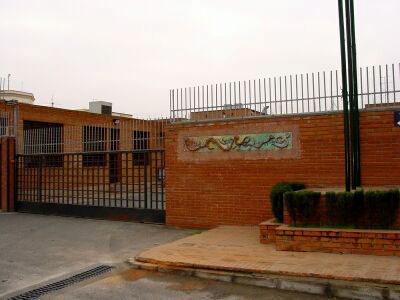
To this end, activities are developed to bring the varying realities of incarcerated individuals closer together, aiming to break down stigmas and build understanding. A key example is the “Crossing Walls” project led by Amanterrou, where young people from diverse backgrounds collaborated to paint a mural on the prison wall. “It fosters artistic expression, participation, and community building,” says Amanterrou. The mural features key words chosen by the youth: "Freedom, patience, time, and looking beyond, looking forward."
Youth in Custody
Amanterrou specializes in working with the young adult prison population, aged 18 to 21 (with extensions up to 23 in specific cases). She explains that these young adults often lacked the opportunities others had to build or project a future, having grown up without supportive environments that would allow them to envision alternative paths.
“Our focus is helping them recover that ability to plan for the future and make more conscious choices,” Amanterrou notes, adding: “It is a very diverse group, and through intercultural education and physical exercise, we promote healthy habits and emotional management.”
In this context, she highlights that intercultural mediation “helps create safe dialogue spaces where they can express needs, tensions, and values. This reduces conflict and fosters a culture of mutual respect.”

Special Closed-Regime Units
El Gourche works primarily with individuals in Special Closed-Regime Units (DERT), representing solitary or isolated conditions. He emphasizes that this regime applies to individuals whose behavior poses a risk to facility safety, staff, or other residents. “It is an exceptional, strictly regulated measure continuously reviewed to ensure it remains temporary and proportionate,” El Gourche explains.
Isolation can carry severe psychological stress; therefore, intervention focuses on “mitigating negative impacts and supporting progress” so individuals can successfully transition back to group living environments.
Individualized Care
Both El Gourche and Amanterrou stress the importance of personal, one-on-one engagement, which benefits both facility adaptation and long-term community reintegration.
El Gourche notes that individual support guides individuals through adjusting to prison rules and operations while addressing complex personal issues through a culturally sensitive lens.
“Through intercultural mediation, we also focus on the individual's post-release plan. We help them reflect on their goals, evaluate available resources, and identify the first concrete steps forward,” concludes Amanterrou.


