



When we talk about quality in early childhood education, we think about children's well-being, the relationships they build, the learning environments they experience and the educational approach that supports their development. But there is another equally important dimension: how we care for, support and encourage the professional growth of those who make this education possible every day.
The first three years of life require educators to have a deep understanding of child development, strong observational skills and a sensitive educational approach. Early childhood professionals constantly make decisions, interpret needs, support emotional development and build meaningful relationships with children and their families. Their work demands preparation, reflection and continuous professional learning.
Because educating also means continuing to learn.
Sharing experiences to improve educational practice
Educational knowledge is not built through theoretical training alone. It also emerges from everyday experience, from the questions we ask ourselves when facing specific situations and from opportunities to exchange perspectives with other professionals.
Every nursery school is a place of learning, not only for children but also for its staff. When these experiences are shared across different centres, opportunities for professional growth multiply. Discovering different approaches, exploring new resources, identifying common challenges and reflecting together on educational practice help us broaden our perspectives and introduce improvements.
With this philosophy in mind, Suara Cooperativa organises an annual gathering that brings together professionals from the nursery schools we manage. It is an opportunity to reconnect, share experiences, take part in professional development and, above all, dedicate time to reflecting collectively on our educational practice.
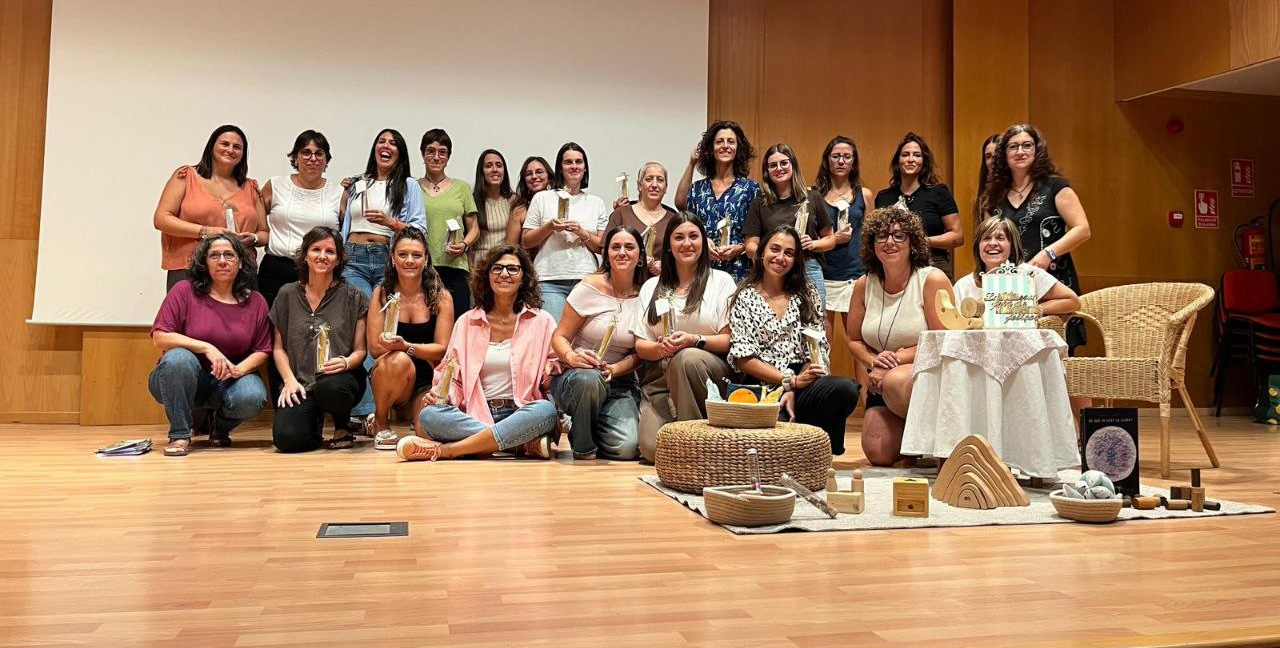
At the fourth edition, more than 180 professionals came together for an event focused on pedagogical observation and documenting children's learning processes. Experiences shared by different nursery schools, alongside the work carried out through the Building Thought project, encouraged reflection on how we observe children's development and how we communicate these observations to families.
A photograph, an observation or a story about a child's activities may seem simple, but each involves important educational decisions. What do we observe? What do we want to communicate? How can we make learning visible while respecting each child's individuality? Exploring these questions together helps us review and enrich the way we support children.
Professional development is also a way of recognising educators
In a sector facing significant challenges, creating opportunities for reflection and professional development is also a way of recognising the valuable work carried out by educational teams.
Early childhood professionals need more than up-to-date knowledge and practical tools. They also need opportunities to share concerns, exchange experiences and feel part of an educational community that learns and evolves together.
These opportunities strengthen relationships between teams, recognise the knowledge developed in everyday classroom practice and bring visibility to work that often remains unseen beyond each individual centre.
For this reason, continuous professional development should not be viewed as an occasional activity or solely as an individual responsibility. It should be embedded in an educational culture that values shared learning and provides the time and space needed to make it possible.
Supporting educational teams means supporting quality education
After thirty years working in early childhood education, I firmly believe that quality education requires well-prepared professionals, but also teams who feel heard, valued and supported.
Our annual gatherings reflect this understanding of education: they are spaces where knowledge is shared, experiences are exchanged and educators themselves become the driving force behind educational improvement.
Supporting educational teams is about more than providing training. It means recognising their expertise, trusting their capacity for reflection and creating the conditions that enable them to continue growing.
And when educators have opportunities to learn, share and move forward together, we also help enrich the education that children receive.
Because caring for early childhood also means caring for those who support children through these crucial years.
Mireia Miralles | Linkedin
Operations Director at Suara Cooperativa


