

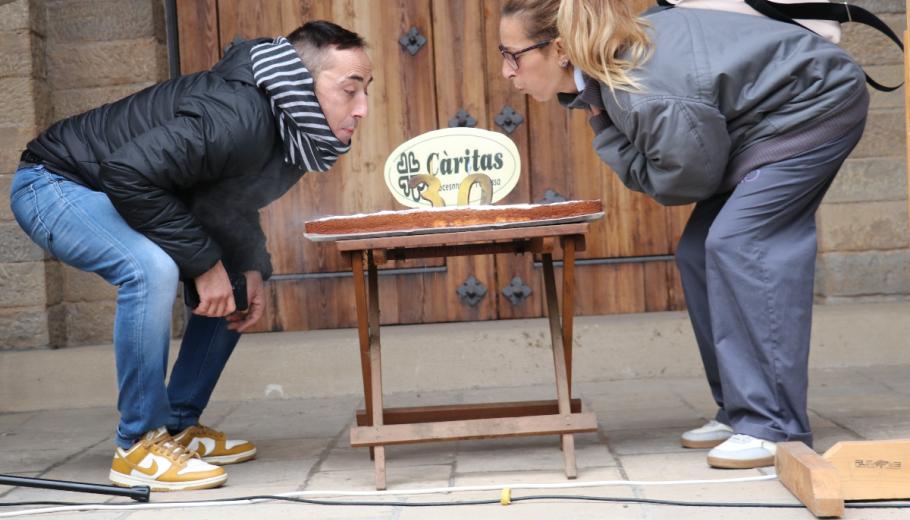


In an emotional event, five people who live in this resource or have resided there, say that going through this center has transformed their lives
Sara celebrated today that 30 years ago it opened its doors to accompany people who are homeless and have HIV. Located in the rectory of a church, which the priest gave away to fill it with life instead of leaving it empty, in these three decades both the situation of the service and the disease have changed a lot. However, what has always remained stable is its raison d'être: transforming the lives of the people served.
“It is a place where there is no time limit and, therefore, it is a safe space, where they have a tutor and can make their way to rebuild their lives at their own pace”, says Mar Díeguez, director of Sara, a Cáritas service, managed by Suara Cooperativa.
For this reason, she argues that the main task of the day-to-day is to try to ensure that the person being cared for has a life that is as normalized as possible and, therefore, can carry out such everyday actions as living with other people, doing housework, going shopping, managing visits to the doctor, taking medication or following therapy. “It is about rebuilding habits that have been lost. It may seem little, but it is a lot because we start from very unstructured lives”, Díeguez argued.
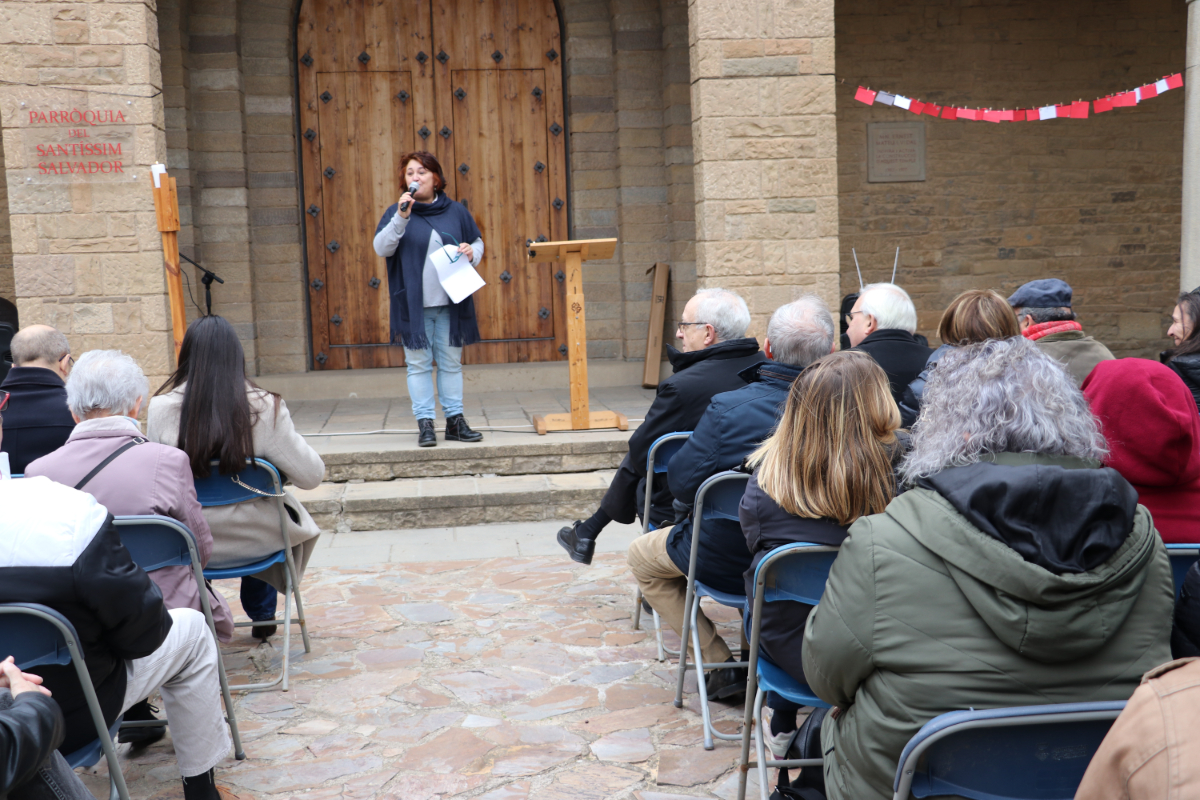
Sara is a home
To commemorate the anniversary, an event was held today at Sara, which included the testimony of five people who were treated at this center, who agreed that the service had transformed their lives for the better
Marisa, who no longer lives at Sara, currently volunteers at Càritas, as she wanted to give back to society all the help she had received. When she arrived there, she admitted that she was very unwell and unhappy, but in this space she found the support she needed. “For me it is a miracle that you were here to take care of us. Thanks to the people who work here, I am happy because the only family I have known in my life are the educators at Sara,” she said, visibly moved.
Jordi is one of the people who has been residing at this service for a year and a half. He came from a resource in Empordà, where he didn't quite get going because he was constantly arguing with the people who lived or worked in that center. At first, he didn't want to move to Sabadell, since he was far from his mother, but now he confesses that it was a good decision: "I learned a lot at Sara. I learned to get rid of my anger, extend the time I feel good and manage many things that go through my head or my emotions."
One of the people he lives with is Jonathan, who assures that in the six months he has been in this service that he considers home, he has managed to "recover a lot" and fill himself with vitality due to the support he has found from both the people he is cared for and the workers. "The experience at the house is very positive because I feel very supported by the people who work there and very well welcomed by my colleagues," he stressed.
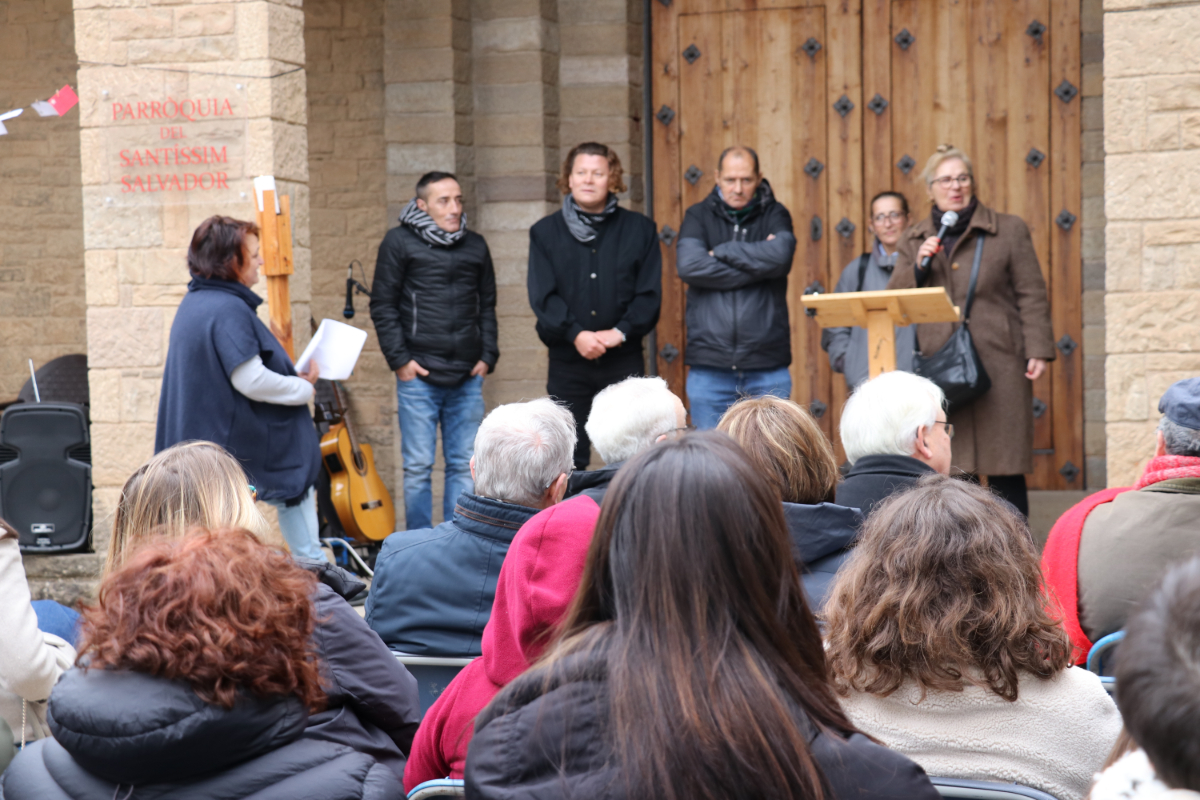
Nelson is also part of Sara's current family, and has said that she has found a safe place in this resource. "I am very grateful to all of you who are here because Sara is a home, a refuge," she said.
Currently, Juani works in a cleaning company, a job she was able to get after living for six years at Sara, where she found "great support" from both the educators and the residents. "I continue to come here when I can because for me it is a pillar," said Juani, who hopes that this service "never ends."
The beginnings of Sara
The first steps of this resource, however, were not easy at all, as it encountered a lot of opposition from the neighborhood because at that time HIV was a very unknown disease and was also very stigmatized, recalled Alfons Gea, Eduardo Ocio and Josep Escartín, who witnessed its birth, in a round table that they held together during the celebration of the beginnings of Sara.
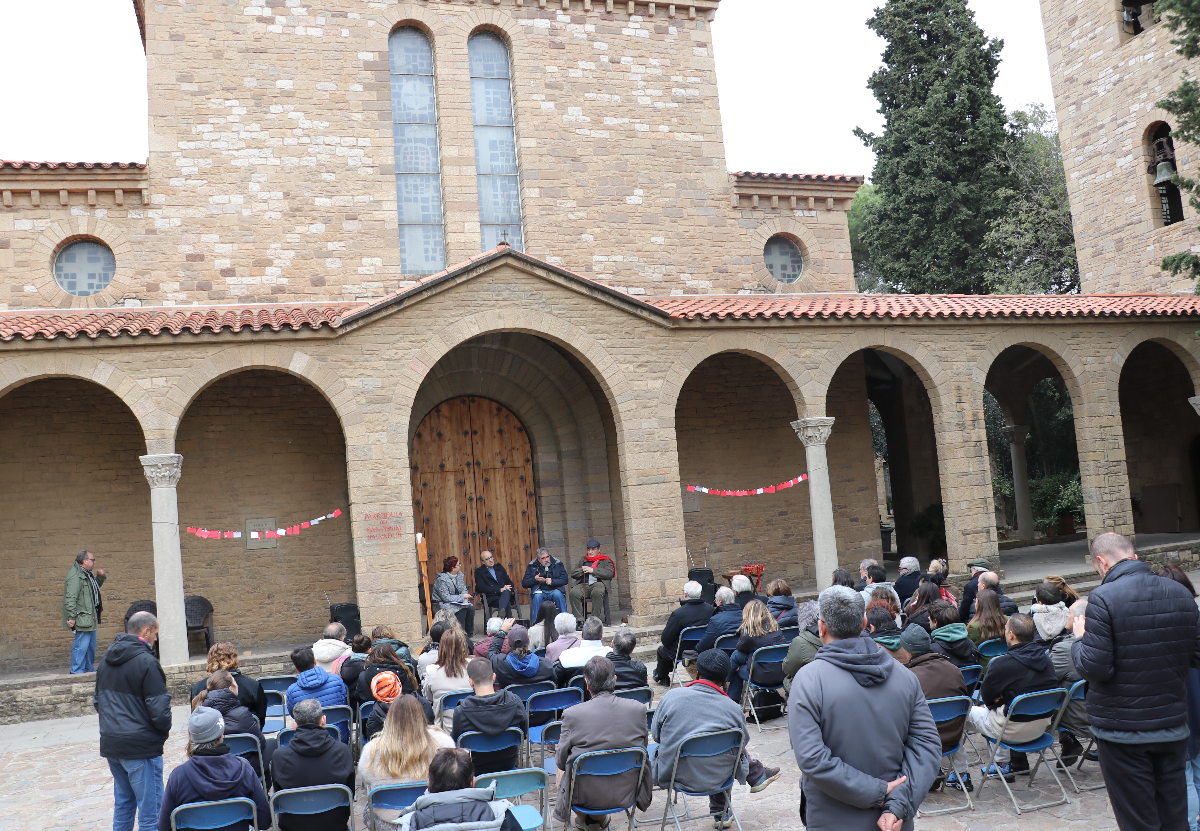
An idea that was also taken up by the bishop of Terrassa, Monsignor Salvador Cristau, in his opening speech at the event: “The HIV situation is not the same now as it was 30 years ago and the decision to locate the center here caused a lot of tension”:
Thanks to retrovirals, which have chronicized the disease, the reality of people with HIV has changed a lot in 30 years, but we must continue working with them, since the appearance of the virus transforms their lives, defended the health councilor of Sabadell, Sílvia Garcia Peláez. “For us, it is truly a matter of pride and pleasure to celebrate these 30 years and for there to be many more,” she said.
Remembering those who are no longer here
The event was ignited by an emotional reminder of the people whose lives have been taken by HIV. For this reason, the center's management asked those in attendance to hang on a rope the name of someone they had lost to this disease. Around sixty names were present at each of the speeches.

“Today we remember the people who, unfortunately, have left us, but we also support those who are still here, who are strong and continue to believe that they have new opportunities,” argued Mònica Martinet, director of Càritas Diocesana de Terrassa
Without a doubt, for Mar Díeguez, among the most complicated challenges of the service is accompanying people in their last days of life and managing their grief. However, she also recognizes that it has brought her many positive things, such as growing both professionally and personally, since she has learned a lot from each of the people she has cared for. “I wouldn't be who I am if I hadn't gone through Sara,” Díeguez said.


